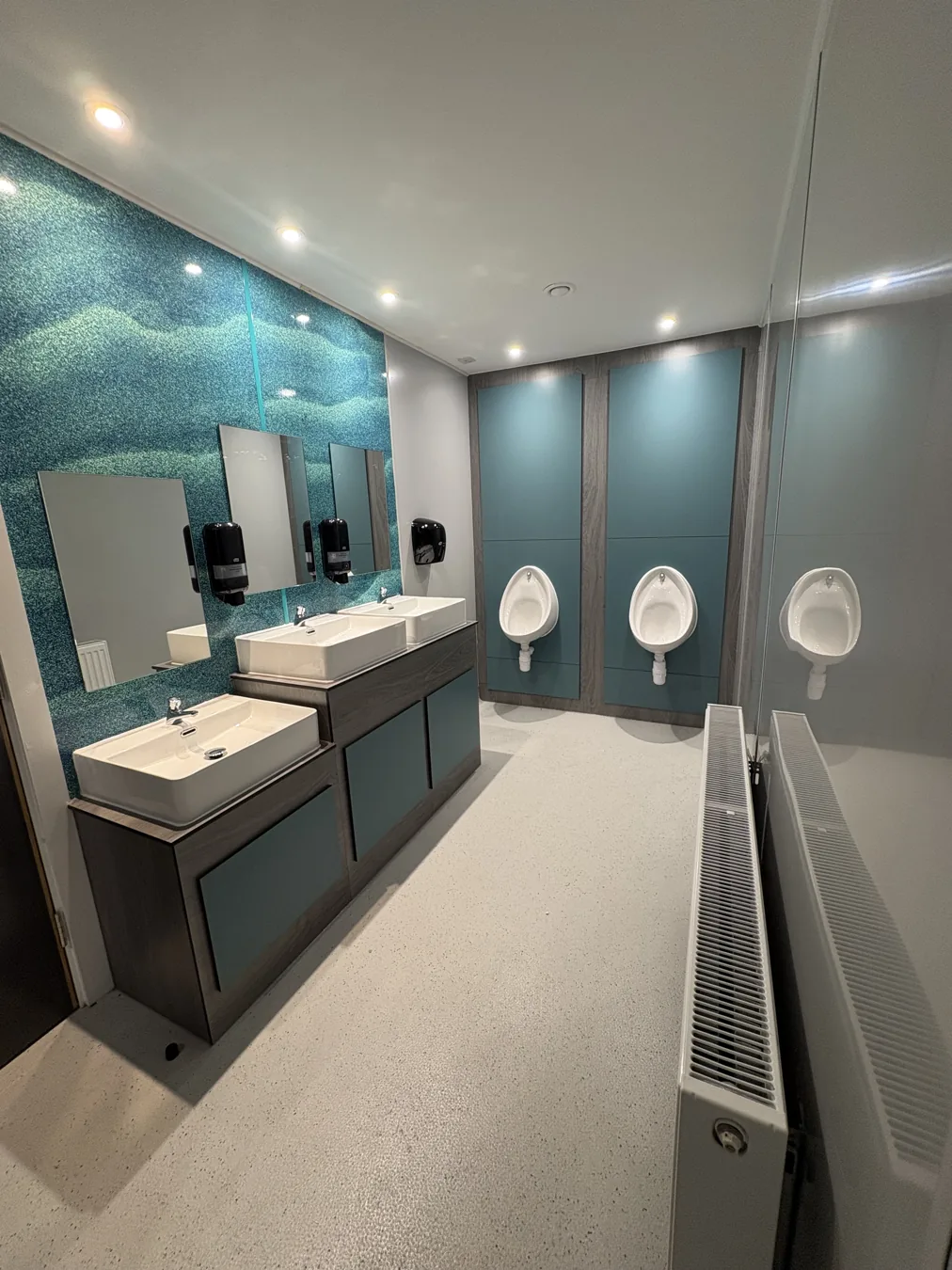
A washroom wall finish is rarely just a design decision. In a school changing area, a busy office washroom or a public leisure facility, it must stand up to frequent cleaning, moisture, impact and years of daily use. The choice between wall cladding vs ceramic tiles affects appearance, hygiene planning, maintenance demands and the long-term value of a commercial refurbishment.
Both materials have a place in commercial projects. The right option depends on the environment, the cleaning regime, the required design standard and how closely the wall finish needs to coordinate with cubicles, vanity units and access panels.
Wall cladding vs ceramic tiles: the practical difference
Ceramic tiles are a familiar, hard-wearing wall finish. They offer a broad choice of sizes, colours and surface effects, from plain gloss finishes to stone-look or patterned designs. Their individual format can suit projects where a traditional tiled appearance is part of the visual brief.
Commercial wall cladding generally uses large-format, decorative panels to create a more continuous surface. With fewer joins than a tiled wall, cladding can give washrooms and changing rooms a cleaner, more modern appearance. It is particularly well suited to specification-led schemes where coordinated colours and finishes are required across the wider washroom.
The key distinction is the number of joints. A tiled wall contains grout lines throughout the surface. Cladding has panel joints, but significantly fewer of them. That difference has implications for cleaning, visual consistency and ongoing upkeep.
Hygiene and cleaning performance
For facilities teams, the condition of wall surfaces can have a direct effect on how easily a washroom is maintained. Ceramic tiles have a non-porous face that is straightforward to wipe down, but grout is more vulnerable to staining, discolouration and the gradual build-up of residue. In high-use areas, grout lines often become the element that needs the closest attention.
Wall cladding provides a larger, smooth surface with fewer places for dirt and moisture to collect. This can make routine cleaning more efficient, particularly in washrooms with a demanding cleaning schedule. It also gives the room a more uniform appearance between cleans, which matters in customer-facing offices, leisure venues and public buildings.
That does not mean cladding is automatically maintenance-free. The selected panel material must be appropriate for the cleaning products and conditions expected in the space. Abrasive products or unsuitable chemicals can affect any decorative surface over time. A clear cleaning specification should therefore sit alongside the material choice.
Durability in high-traffic environments
Commercial washrooms are exposed to more than water. Bags, cleaning equipment, trolleys and general day-to-day contact can mark or damage walls, especially around basins, hand dryers and circulation routes.
Ceramic tiles perform well when their surface remains intact. However, a localised impact can crack or chip an individual tile. The issue may be limited to a small area, but matching a replacement tile to an older batch or discontinued range is not always straightforward. Grout can also deteriorate sooner than the tile itself, leaving a wall that looks tired before the main surface has reached the end of its working life.
Quality wall cladding is designed for commercial use and can provide a durable, wipe-clean finish across large areas. Its performance will vary by panel construction, thickness and surface specification, so products should be selected against the expected level of traffic and potential impact. In a busy school or sports changing facility, a more resilient panel specification may be justified. In a low-traffic executive washroom, aesthetic requirements may carry more weight.
Design flexibility and coordinated specification
Tiles can create a highly distinctive scheme. They are useful where a project calls for feature walls, varied layouts or a particular architectural finish. Smaller tiles can work well around detailed areas, while larger formats reduce the visual busyness of a tiled elevation.
Wall cladding offers a different kind of design control. Panels are available in a wide range of plain colours, woodgrains and contemporary decorative finishes. For commercial washrooms, this makes it easier to coordinate wall surfaces with cubicle doors, vanity units, IPS access panels and benching. A coordinated palette can make a compact washroom feel more considered, while helping a larger site maintain a consistent identity across multiple rooms.
This is especially valuable for education, healthcare and public-sector projects, where repeated room types benefit from a clear, controlled specification. Rather than selecting each finish in isolation, buyers can consider the washroom as one coordinated system.
Moisture resistance and wet-area suitability
Both ceramic tiles and wall cladding can be suitable for wet areas when specified correctly. Ceramic is commonly used in washrooms because its glazed face resists moisture. The performance of the finished wall, however, is also dependent on the grout and the condition of the joints.
Wall cladding can be an effective choice where regular moisture exposure is expected and an easy-clean finish is a priority. It is often selected for shower areas, changing rooms and washroom splash zones because large panels reduce the number of joints across the wall. The detail at edges, corners and service penetrations remains critical to the overall specification, particularly in areas with sustained wet use.
For either material, the surrounding environment matters. A standard office WC, a poolside changing room and a clinical washroom do not place the same demands on a wall finish. Specifiers should assess humidity, cleaning frequency, anticipated water exposure and the condition of the existing wall background before confirming the material.
Cost: look beyond the initial material price
A direct price comparison can be misleading. The purchase cost of tiles may appear competitive, especially for basic ranges, but commercial projects should account for the wider cost of the completed wall surface and its expected upkeep. Grout maintenance, future tile matching and the time required to keep joints clean can all influence whole-life value.
Wall cladding may have a higher initial material cost depending on the chosen finish and panel specification. Yet its larger format and low-joint surface can reduce future cleaning effort and help maintain a consistent appearance for longer. For facilities teams managing several washrooms, these operational benefits can be more significant than a small difference in day-one cost.
Budget should not be separated from project programme either. A manufacturer with stock-supported options, technical guidance and clear lead-time information can help buyers make decisions with greater certainty. For urgent commercial refurbishments, certainty around supply is often as important as the material itself.
Compliance and specification considerations
Wall finishes in commercial washrooms must support the wider requirements of the building and its users. This may include fire performance, hygiene expectations, accessibility considerations and the demands of the relevant sector. Healthcare, education and leisure facilities can each have different priorities, even where the basic room layout is similar.
It is sensible to request product data early, rather than treating wall finishes as a late decorative choice. Confirm the panel or tile specification, cleaning guidance, fire information where relevant, colour consistency and suitability for the intended environment. If wall cladding is being specified alongside cubicles and IPS panels, the finishes should be reviewed together to avoid mismatched tones or conflicting performance requirements.
Experienced manufacturers can add value at this stage by helping buyers compare practical options against the project brief. Total Cubicles supports commercial washroom specifications with UK manufacturing, product guidance and coordinated ranges designed for demanding public-use settings.
Which option is right for your project?
Choose ceramic tiles when the design brief calls for a traditional tiled finish, detailed patterns or a surface that complements an existing tiled scheme. They remain a proven option for many washrooms, provided the client accepts the maintenance commitment associated with grout.
Choose wall cladding when hygiene, quick cleaning, coordinated finishes and a low-joint appearance are central to the brief. It is often the stronger choice for high-traffic washrooms, changing areas and multi-site commercial projects where a consistent standard is needed across numerous spaces.
The best decision is not about declaring one material universally better. It is about selecting the wall finish that will still look appropriate and perform reliably after thousands of users, repeated cleaning cycles and the everyday pressure of a commercial environment.