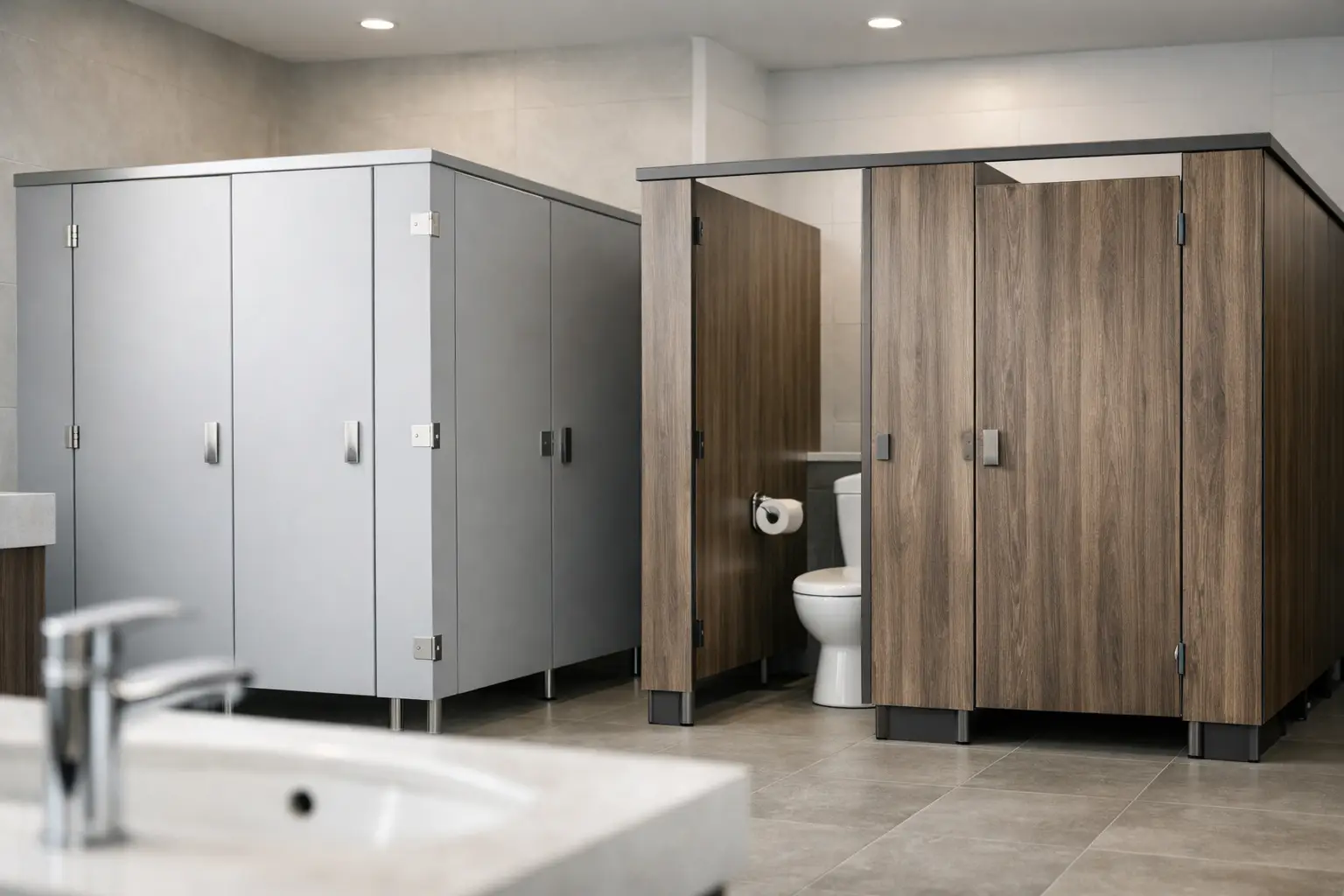
When a washroom has to cope with constant daily use, cleaning regimes and changing levels of moisture, the material choice quickly stops being a detail. For many specifiers and buyers, the question is whether hpl or compact laminate cubicles will give the right balance of cost, durability and long-term performance for the site.
This is not a one-size-fits-all decision. A school washroom, a corporate office and a leisure facility can all need very different things from the same cubicle layout. Getting the board specification right at the start helps avoid premature wear, replacement cycles and unnecessary spend later in the project.
What are hpl or compact laminate cubicles?
HPL cubicles are typically manufactured using a moisture-resistant core faced with high-pressure laminate. They are designed to offer a durable, cost-effective finish for commercial washrooms where performance matters but budgets still need to be controlled. For many dry or moderately humid environments, HPL provides a practical specification.
Compact laminate cubicles are different in construction. Rather than a faced core board, the panel is formed from layers of kraft paper compressed with resin to create a dense, solid-grade material. The result is a board with very high impact resistance and strong performance in wet and heavy-traffic conditions.
On paper, both options can look suitable for commercial use. In practice, the right choice depends on where the cubicles are going, who is using them and how demanding the environment is likely to be over time.
HPL cubicles in commercial settings
HPL is often selected for offices, schools, colleges and general public buildings where the washroom is well managed and not constantly exposed to standing water or steam. It gives buyers a smart, professional finish with a broad choice of colours and design options, while keeping the specification commercially sensible.
For many projects, that matters. Not every site needs the heaviest-duty board available, and over-specifying can put pressure on budgets without delivering a meaningful operational benefit. If the washroom is in a relatively controlled internal environment, HPL can be the right answer.
That said, HPL does have limits. While it offers good surface durability and moisture resistance, it is not usually the first choice for shower areas, poolside changing rooms or washrooms that remain wet for long periods. In those situations, the environment itself becomes the deciding factor.
Where HPL works well
HPL cubicles are often well suited to office washrooms, school toilet areas, staff facilities and lower-risk commercial interiors. They can support projects where appearance, value and dependable everyday performance are the main priorities.
They are also a sensible option when programme and budget need careful management across a wider package of washroom products. In specification-led projects, that can be important, especially when coordinated finishes are needed across cubicles, IPS panels and vanity units.
Why compact laminate cubicles are chosen
Compact laminate cubicles are specified where durability needs to be pushed further. Because the material is solid throughout, it performs particularly well in demanding environments where knocks, humidity and frequent washdowns are part of normal use.
Leisure centres are a clear example. Changing rooms, poolside facilities and shower-adjacent areas create conditions that quickly test lower-grade materials. Compact laminate is better equipped for that pressure. The same applies in some healthcare settings, transport hubs and high-volume public washrooms, where hard use is expected every day.
Another advantage is rigidity. Compact laminate has a substantial feel and can support a premium, durable finish for projects where longevity is a key part of the brief. Buyers looking at whole-life value often consider this carefully, especially where maintenance disruption would be costly or inconvenient.
Where compact laminate earns its cost
Compact laminate generally comes at a higher price point than HPL, so the question is not whether it is better in absolute terms, but whether the environment justifies the uplift. In wet and high-abuse settings, it often does. In a standard office washroom, it may not.
This is where clear project assessment matters. If the washroom is likely to face repeated moisture exposure, heavier user traffic or tougher cleaning conditions, compact laminate can provide stronger long-term value. If those pressures are limited, HPL may remain the more efficient specification.
HPL or compact laminate cubicles for schools, offices and leisure
Sector use is often the simplest way to narrow the choice.
In schools, the answer depends on the age group, supervision levels and whether the area is a toilet block or changing facility. For many school toilet cubicles, HPL can be an effective and economical choice. In busier secondary settings or tougher-use changing rooms, compact laminate may be worth considering for added resilience.
In offices, HPL is frequently the preferred option because it delivers a clean, professional appearance with good durability at an appropriate cost. Most office washrooms do not face the same moisture or misuse levels seen in leisure or public transport settings, so compact laminate can sometimes be more than the brief requires.
In leisure facilities, compact laminate is usually the stronger fit. Higher humidity, regular cleaning and heavier traffic make a stronger case for solid-grade performance. The same logic often applies to sports venues and wet changing areas.
Cost, lifespan and value
Commercial buyers rarely choose solely on purchase price. They are balancing capital cost, visual standard, expected lifespan and the practical risk of early replacement.
HPL normally offers the lower upfront cost, which makes it attractive for budget-sensitive refurbishments and large-scale rollouts. Where the environment is suitable, that can be the right commercial decision.
Compact laminate tends to cost more initially, but that higher spend may be justified if it extends service life in harsher conditions. A board that stands up better to impact and moisture can reduce the likelihood of damage-related replacements. For estates teams and public sector buyers, that matters as much as first cost.
The key is to compare like with like. A lower-cost board in the wrong environment is rarely good value. Equally, a premium specification in a low-demand setting may tie up budget that could be better used elsewhere in the fit-out.
Appearance and finish options
Both HPL and compact laminate cubicles can support a high-quality commercial finish. Colour choice, hardware selection and overall system design all influence the final look, and professional buyers often want materials that match the wider interior scheme rather than simply meet a minimum standard.
HPL offers flexibility for many contemporary washroom schemes, especially in offices, education and public buildings where coordinated finishes are important. Compact laminate also supports strong visual outcomes, with the added perception of substance and durability that some projects value.
For architects and specifiers, the choice is rarely only technical. It is also about presenting a washroom that fits the building type, user expectations and funding level. A material needs to perform, but it also needs to sit comfortably within the wider project design.
Making the right specification decision
The best route is to assess the washroom honestly. How wet will the area become during normal use? How hard will the cubicles be treated? Is the project driven mainly by budget control, or by long-term durability in a demanding environment?
Those questions usually point to the answer quickly. If the setting is dry to moderately humid and requires a sensible balance of quality and cost, HPL is often a strong choice. If the washroom is wet, heavily used or exposed to tougher wear, compact laminate is more likely to justify its place in the specification.
This is where working with an experienced UK manufacturer can save time. Product guidance, material advice and CAD support help buyers compare options with more confidence, especially when a project includes multiple coordinated washroom elements and tight lead-time expectations.
For many commercial projects, the real decision is not hpl or compact laminate cubicles in isolation. It is choosing the material that matches the actual operational demands of the building, rather than the assumed ones. Get that balance right, and the washroom is far more likely to keep performing well long after handover.