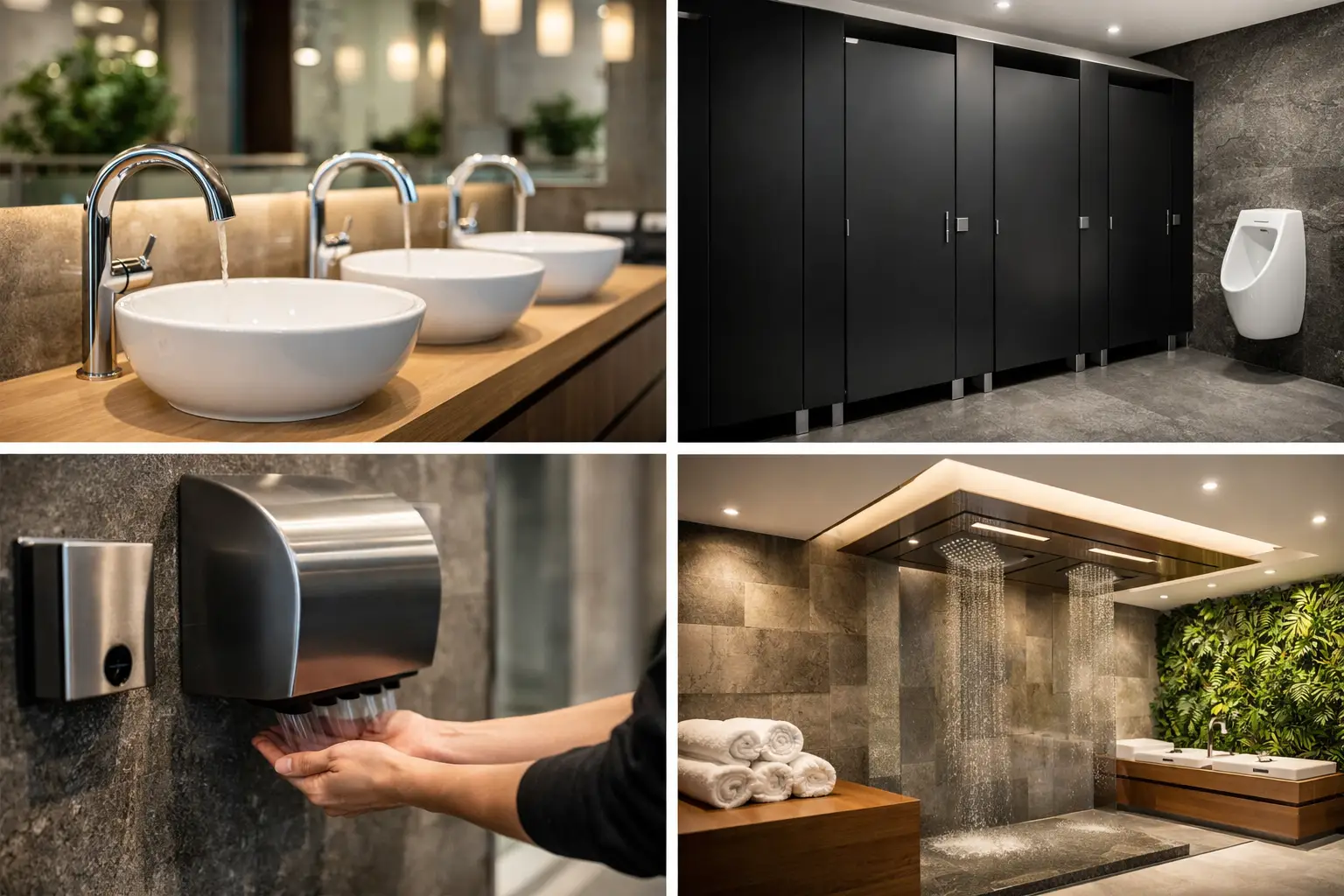
A well-designed washroom is rarely judged on looks alone. In schools, offices, leisure sites and public sector buildings, the real test is whether the space stands up to daily use, supports hygiene, meets user expectations and stays straightforward to manage over time. That is why commercial washroom design trends are moving in a practical direction. Buyers are looking for finishes and layouts that do more than present well on handover – they need to perform under pressure.
For specifiers and procurement teams, the shift is clear. Design decisions are now tied more closely to durability, compliance, maintenance demands and lead-time certainty. Visual appeal still matters, but it sits alongside tougher questions about material suitability, privacy standards, accessibility and whole-project coordination.
Commercial washroom design trends are becoming more performance-led
One of the strongest trends is the move away from purely decorative specification. In high-traffic commercial settings, buyers are placing greater value on products that retain their appearance and function after repeated use. That often means choosing cubicle systems, vanity units and wall finishes that resist moisture, impact and wear rather than following short-lived interior fashions.
This is particularly relevant in education and leisure environments, where washrooms can see intensive daily traffic. A smarter finish can improve first impressions, but if it marks easily or struggles in wet areas, the cost of replacement can rise quickly. In practice, many projects now favour design choices that balance appearance with a proven service life.
There is also a growing preference for coordinated product packages. Rather than sourcing cubicles, IPS panels, vanity units, wall cladding and benching separately, buyers increasingly want a joined-up specification. It reduces variation across the scheme and gives greater confidence that finishes, dimensions and performance levels will align.
1. Greater emphasis on privacy
Privacy has become a more prominent part of commercial washroom design trends, particularly in schools, offices and public-facing buildings. End users expect spaces that feel secure and considered, not exposed or dated. This has influenced cubicle design, door height preferences and the overall look of partitioned spaces.
That does not mean every site needs the same privacy level. A busy primary school, a corporate office and a leisure changing area all have different requirements. The current trend is less about one standard solution and more about choosing the right cubicle style for the environment, age group and level of supervision needed.
For buyers, this is where sector-specific ranges make a difference. A product that suits one setting may be excessive or impractical in another. The best results usually come from matching privacy expectations with traffic levels, cleaning demands and budget rather than specifying to extremes.
2. Materials chosen for durability, not just appearance
Material selection is becoming more disciplined. Commercial buyers are increasingly aware that attractive finishes are only worthwhile if they perform well in the intended environment. Washrooms exposed to frequent moisture, heavy use or demanding cleaning regimes need boards, surfaces and hardware that can cope with those conditions.
This has led to stronger interest in moisture-resistant and impact-resistant solutions across cubicles, access panels and vanity units. In practical terms, that supports better lifecycle value. A lower upfront price can look appealing on paper, but if the product deteriorates quickly in service, the saving is often short-lived.
The same principle applies to colour and finish selection. Neutral tones and timber effects remain popular, but not simply because they look current. They are often chosen because they age well visually and work across a wide range of sectors, from offices to public buildings. Trend-led colours can still work, especially in education or bespoke schemes, but buyers are generally more selective about where to use them.
3. Better hygiene through simpler surfaces and layouts
Hygiene has become a lasting design priority rather than a short-term response to public health concerns. One result is a preference for cleaner visual lines, straightforward surface detailing and layouts that are easier for facilities teams to keep in good order.
This affects more than fittings. Wall cladding, IPS systems and vanity arrangements all influence how manageable a washroom is over time. Concealed services behind access panels can support a tidier finish, while coordinated surface materials can reduce awkward junctions and create a more consistent appearance.
There is, however, a balance to strike. Highly minimal schemes can look impressive, but commercial environments still need practical access for servicing and long-term upkeep. Good specification is about combining neat presentation with sensible product choices that support day-to-day management.
4. Inclusive design is expected, not optional
Accessibility is now part of mainstream commercial washroom planning. In many sectors, it is no longer treated as a separate or secondary requirement. Buyers are expected to think carefully about how washrooms serve a broad user base, including accessible and ambulant needs, and how those spaces sit within the wider design.
This has encouraged a more integrated approach. Rather than creating one compliant room and giving less thought to the rest of the washroom provision, specifiers are looking more closely at circulation, usability, privacy and finish consistency across the whole scheme.
The practical benefit is that inclusive design usually improves the space for all users. Clearer layouts, sensible proportions and well-considered fittings tend to produce better outcomes across education, healthcare, offices and public buildings alike. Where guidance and compliance requirements apply, early technical input can also help avoid costly specification changes later in the project.
5. Sector-specific design is shaping product choice
Another clear trend is the move towards sector-led specification. Commercial washrooms are no longer being treated as one-size-fits-all spaces. The demands of a sixth form block are different from those of a motorway service building or a corporate headquarters, and buyers are responding accordingly.
In schools, durability, anti-vandal performance and age-appropriate design remain central. In offices, there is often more emphasis on finish quality, privacy and creating a washroom that reflects the wider workplace environment. In leisure and changing areas, moisture resistance and coordinated benching or locker provision become more important. Healthcare settings may place greater weight on hygiene, compliance and straightforward cleaning.
This is where manufacturer support becomes particularly valuable. A broad product range is useful, but only if buyers can match the right specification to the right environment without wasting time. Consultation and CAD support can help narrow choices quickly and keep the design aligned with the use case.
6. Faster project programmes are influencing specification
Lead times are now part of the design conversation. Commercial washroom design trends are being shaped not only by what buyers want aesthetically, but by what can be delivered with confidence inside tight programmes. For contractors and public sector teams, this matters as much as finish selection.
That is one reason why practical, made-to-specification systems with clear range options are gaining ground. Buyers want flexibility, but they also want certainty. Standardised range structures, rapid-delivery options and clear technical guidance can help projects move forward without compromising too heavily on quality.
There is an obvious trade-off here. Highly bespoke schemes can create a strong visual result, but they may introduce longer decision cycles and procurement risk. In many commercial projects, the stronger choice is a well-designed standard or semi-bespoke solution that meets the brief, supports programme deadlines and gives confidence on quality.
7. Coordinated interiors are replacing piecemeal fit-outs
A commercial washroom now tends to be specified as a complete environment rather than a collection of separate products. Cubicles, vanity units, IPS panelling, wall cladding and complementary changing room items are increasingly chosen together to create consistency in both appearance and performance.
This trend is partly visual, but it is mainly practical. A coordinated approach can simplify decision-making, reduce mismatched materials and help buyers maintain quality across the scheme. It also supports clearer accountability when one manufacturer can provide a broad package backed by technical support.
For project teams managing multiple spaces across a school, office or leisure facility, that consistency becomes even more valuable. It helps maintain standards from one area to the next and can make future refurbishments easier to plan.
8. Bespoke design is being used more selectively
Bespoke finishes, printed cubicles and more tailored visual schemes remain relevant, especially where branding, wayfinding or user experience is a priority. In education, they can support age zoning or create a more engaging environment. In commercial offices, they may be used to align washroom design with a broader interior concept.
The trend, though, is towards selective use rather than specification for its own sake. Buyers are becoming more focused on where bespoke design adds genuine value. If a tailored finish improves the user experience, supports the setting or strengthens a public-facing area, it may be worth the investment. If it simply adds complexity without improving performance, many teams will favour a more standardised option.
That practical mindset reflects a broader change in the market. Commercial buyers are under pressure to deliver spaces that look right, perform well and arrive on time. Design has not become less important – it has become more accountable.
What these trends mean for current projects
For anyone planning a refurbishment or new-build washroom, the key shift is this: design choices need to work harder. A successful scheme now depends on more than appearance. It needs the right material performance, the right privacy level, the right compliance response and the right manufacturing support behind it.
That is why early product conversations matter. When buyers can review sector suitability, lead-time expectations and coordinated range options at the start, they are more likely to avoid compromises later. For specification-led projects, that kind of clarity saves time and improves confidence.
After 45 years in the industry, Total Cubicles has seen washroom design move steadily towards smarter, more dependable specification. The strongest schemes are not always the most elaborate. They are the ones that answer the brief clearly, suit the users properly and continue to perform long after the project deadline has passed.