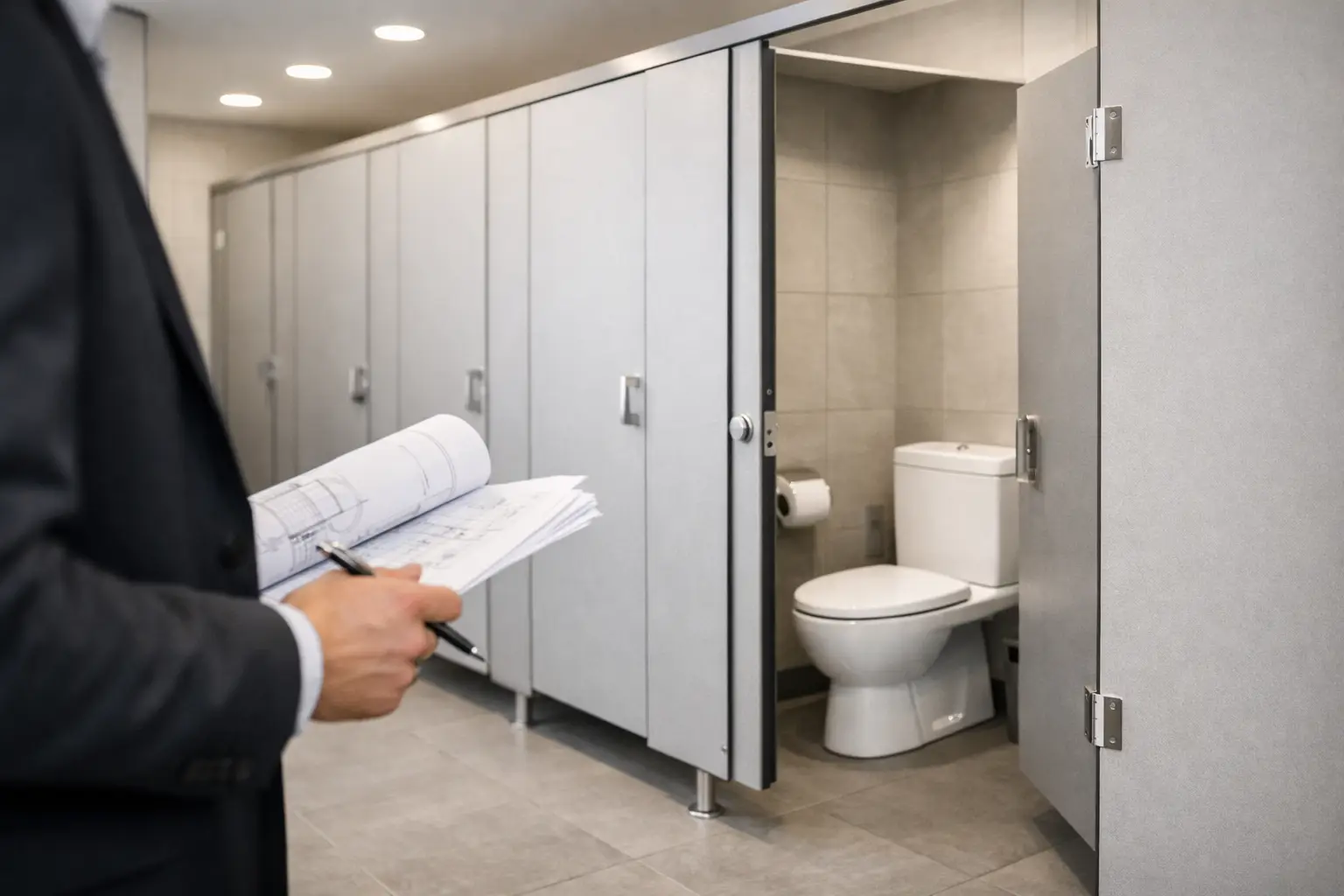
A toilet cubicle schedule can look straightforward until the wrong material, privacy level or clearance detail creates delays later in the project. That is why knowing how to specify toilet cubicles properly matters at the earliest design stage. For architects, contractors, facilities teams and public sector buyers, a clear specification reduces risk, supports compliance and helps keep washroom packages aligned with budget, programme and expected usage.
How to specify toilet cubicles from the outset
The best specifications start with the building type, not the product brochure. A washroom in a primary school has very different demands from one in a city office, leisure centre or outpatient healthcare setting. Before selecting a cubicle range, define who will use the space, how often it will be used and what level of durability, privacy and cleaning performance the environment requires.
High-traffic sites generally need tougher materials and a simpler maintenance approach. Premium office developments may place more emphasis on finish, visual consistency and privacy. Education settings often need age-appropriate heights, strong impact resistance and straightforward replacement options. In public-use environments, anti-vandal considerations and moisture resistance can quickly move from desirable to essential.
This early stage is also where budget should be handled realistically. Entry-level systems can be perfectly suitable for lower-demand areas, but they may not offer the same lifespan or appearance retention as more heavy-duty options. Equally, over-specifying a low-use washroom can add unnecessary cost. The right answer depends on the project brief, expected wear and the client’s longer-term maintenance priorities.
Start with the performance requirements
A good cubicle specification should describe performance before it describes appearance. Material choice, panel thickness, edge treatment, ironmongery quality and headrail arrangement all influence how the cubicles will perform over time.
For dry environments with moderate use, melamine faced board may be appropriate where cost control is a priority. For more demanding commercial washrooms, compact grade laminate often provides greater resistance to moisture, impact and heavy day-to-day use. Solid grade materials are especially relevant where cleaning regimes are frequent, humidity is higher or users are less likely to treat the environment gently.
Privacy expectations also need to be clear from the start. Standard cubicle arrangements may suit many workplace and school settings, but full-height or increased-privacy designs can be more suitable in premium offices, leisure facilities and certain public-facing environments. Sightlines, floor clearance and door gaps all affect user perception, so these decisions should not be left vague.
Colour and finish come later, but they still matter. A specification should reflect the overall washroom design, whether that means an economical neutral scheme or a more design-led finish coordinated with vanity units, IPS panels or wall cladding. Consistency across the package helps procurement, simplifies decision-making and often leads to a cleaner final result.
Match the cubicle system to the sector
Sector suitability is one of the most common reasons specifications succeed or fail. A product range that performs well in one setting may be less suitable in another.
Education washrooms
Schools, colleges and universities usually need robust, practical cubicles that can cope with regular use and straightforward cleaning. Age group matters. Nursery and primary settings often require lower heights and more supervised layouts, while secondary and higher education spaces may need stronger privacy and more mature finishes. Durability should take priority over decorative detail, especially in high-use pupil areas.
Offices and workplace settings
Office washrooms often demand a more refined appearance, but that does not reduce the importance of durability. A smart finish, coordinated vanity area and improved privacy can support the wider fit-out standard. In these projects, the cubicle range should complement the broader interior scheme while still standing up to routine use and cleaning.
Leisure and public-use buildings
Leisure centres, transport hubs and other public-facing sites tend to place the greatest pressure on washroom products. Moisture resistance, impact resistance and easy-clean surfaces are usually central to the specification. Hardware quality becomes particularly important here, as heavy use can expose weak points quickly.
Healthcare and public sector environments
Healthcare and civic buildings often require a more careful balance of hygiene, durability, accessibility and practical maintenance. A clean, understated finish may be preferable, but the underlying specification should still account for heavy use, moisture and straightforward surface care.
Compliance should be built in, not added later
When considering how to specify toilet cubicles, compliance should run through the process from the start. Accessibility requirements, fire performance expectations and sector-specific guidance can all affect the final choice.
For accessible washrooms, dimensions and layouts need to support the relevant standard rather than force a standard product into an unsuitable space. That includes door arrangements, turning space, outward opening where required and the relationship between cubicles, duct panels and surrounding fixtures. In schools and public sector projects especially, these points are often reviewed closely during approval and procurement stages.
Fire performance may also influence board selection and overall washroom design, depending on the building type and specification requirements. It is better to confirm this early than revise material choices later. The same applies to hygiene expectations in settings where cleaning frequency and surface performance are under greater scrutiny.
A manufacturer with specification support and CAD capability can be particularly valuable here, helping project teams sense-check dimensions, product suitability and package coordination before final sign-off.
Key details that should appear in the specification
A vague cubicle specification creates questions later. A useful one gives enough detail for pricing accuracy, product suitability and coordinated manufacture.
At minimum, the schedule should define the cubicle type, material, finish, height, depth, privacy level and hardware finish. It should also identify whether the project includes accessible cubicles, duct panelling, vanity units, wall cladding or changing area products that need to match or coordinate.
Dimensional clarity matters just as much as product clarity. The number of cubicles, room layout, opening directions and any unusual site constraints should be captured early. This is especially important in refurbishment schemes, where existing wall conditions, service boxing or restricted footprints can influence what is practical.
Lead time should also be part of the conversation. If the project programme is tight, it helps to align the specification with a manufacturer that can offer fast turnaround or rapid-delivery options without compromising quality. That can make a significant difference in commercial refurbishments and public sector programmes working to fixed dates.
How to specify toilet cubicles without overspending
Cost control does not simply mean choosing the cheapest board. It means specifying the right level of performance for the job.
In lower-use areas such as small office washrooms or staff-only facilities, an economy or mid-range system may be entirely appropriate. In busy schools, leisure environments or public buildings, spending more on material quality and hardware can reduce replacement cycles and maintenance pressure over time. That is often the more commercial decision, even if the initial purchase cost is higher.
There is also value in rationalising the package. Sourcing cubicles alongside IPS access panels, vanity units, wall cladding or benching from one UK manufacturer can improve design consistency and simplify the approval process. For project teams under time pressure, that joined-up approach often saves more than it costs.
The strongest specifications are rarely the most complicated. They are clear about performance, realistic about budget and tailored to the actual building use.
Common mistakes to avoid
One common mistake is specifying on appearance alone. A finish that looks right on a sample can prove unsuitable if the substrate or hardware quality does not match the demands of the environment.
Another is treating all commercial washrooms the same. A secondary school, a corporate headquarters and a public leisure facility may all need toilet cubicles, but the specification logic is different in each case.
Late decisions can also create avoidable pressure. Leaving privacy details, accessible layouts or complementary products until the final stage often leads to unnecessary revisions. Early consultation usually results in a cleaner package and a more reliable quotation.
After 45 years in the industry, Total Cubicles understands that buyers need more than product choice. They need confidence that the specification is suitable, compliant and achievable within programme.
A practical way to move the project forward
If you are working out how to specify toilet cubicles, begin with the demands of the building, then narrow the choice by durability, privacy, compliance and finish. A well-written specification should make pricing easier, reduce uncertainty and give the client a washroom solution that performs properly for years, not just at handover.
The most useful next step is often a conversation around the layout, sector and timeframe, because the right cubicle system is usually the one that fits the project as it really is, not as it looks on a generic schedule.