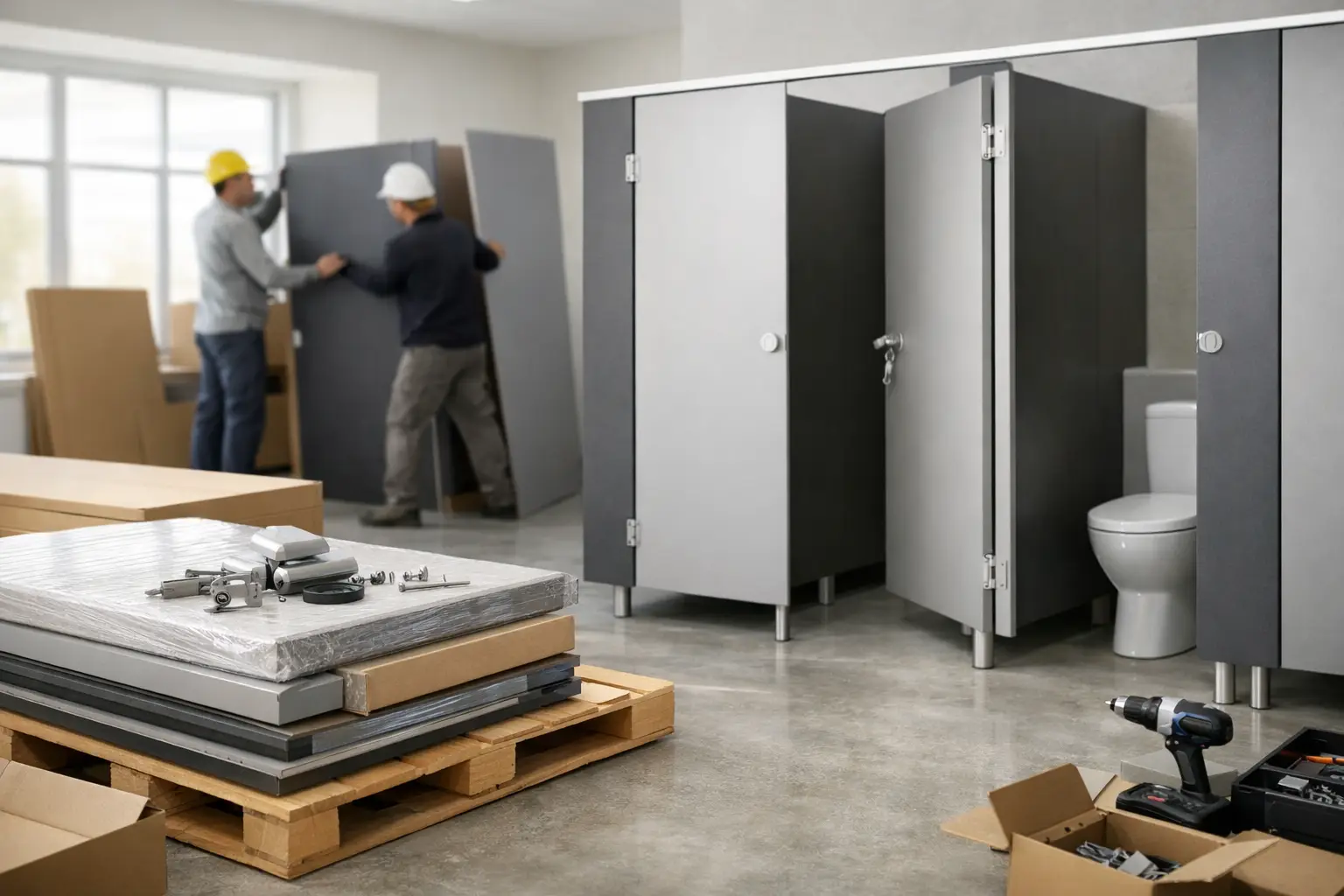
When a washroom project is working to a tight programme, the pressure usually shows up long before the space is handed over. Procurement windows shrink, delivery dates matter more, and every product choice has to support speed without creating problems elsewhere. That is where flat pack toilet cubicles can make commercial sense – particularly for buyers who need dependable lead times, practical handling and specification options that still suit the building type.
For schools, offices, leisure sites and public sector buildings, the appeal is not simply that the product arrives in a compact format. It is that flat pack toilet cubicles can help keep a project moving while still giving specifiers control over materials, appearance and performance. The right choice depends on traffic levels, environment, budget and the standard expected from the finished washroom.
Why flat pack toilet cubicles appeal to commercial buyers
In a specification-led environment, convenience on its own is never enough. Buyers need a product that fits the operational realities of the job. A flat pack format can reduce storage pressure on site, simplify transport planning and support projects where access is more restricted than ideal. In refurbishment work especially, where timing often has to work around building users, that flexibility can be valuable.
There is also a commercial benefit in predictability. If a project team is managing multiple trades, any delay in washroom packages can create wider programme issues. Flat pack toilet cubicles are often chosen because they support faster turnaround and clearer logistics, not because buyers want to compromise on quality. In practice, many commercial clients are looking for a balance – a cubicle system that is efficient to procure, suitable for the environment and available within realistic lead times.
That matters across sectors. In education, deadlines are often tied to term dates. In office refurbishments, downtime has a direct cost. In leisure and public-use settings, washrooms have to cope with frequent use while still presenting well. A product format that helps manage time and storage can therefore support the wider project, provided the specification remains appropriate.
What to look for in flat pack toilet cubicles
Not all cubicle systems are equal, and compact delivery should not distract from the basics. The first question is always suitability for the setting. A low-cost board specification may be acceptable in a dry, lower-traffic area, but that same choice may not be right for humid or heavily used washrooms. Material selection still sits at the centre of performance.
Panel construction, edge treatment and hardware quality all influence how a cubicle range will stand up to commercial use. Buyers should also consider visual consistency across the wider washroom. If the project includes vanity units, IPS panels or wall cladding, coordinated finishes can help create a more complete result and avoid the look of a pieced-together scheme.
It is also worth looking closely at dimensional flexibility. Standard sizes may suit many projects, but some buildings bring awkward footprints, ceiling constraints or non-standard layouts. In those cases, technical support becomes just as important as the product itself. A manufacturer that can advise on the right range, appropriate material grade and available design options can reduce the risk of a specification that looks good on paper but proves less suitable in use.
Flat pack toilet cubicles and lead-time pressure
Lead time is often the factor that moves a product from being merely suitable to being genuinely useful. Commercial buyers are rarely working in ideal conditions. Tender returns can be delayed, approvals can arrive late, and procurement can start after other project milestones have already tightened.
This is where flat pack toilet cubicles tend to stand out. Their format supports a faster-response approach for buyers who need a practical solution without waiting for a fully bespoke package where time is short. That does not mean every project should default to the quickest option. It means buyers can keep momentum when speed is a live issue.
For contractors and facilities teams, the real value is certainty. A responsive UK manufacturer with clear product knowledge can often make the difference between a washroom package that fits the programme and one that becomes another source of delay. Fast availability is most useful when it comes with informed guidance on what can be delivered, what specifications are realistic and where product choices may need to flex.
Choosing the right range for the building
The phrase flat pack toilet cubicles covers a wide spread of possible products, from economical systems for lower-demand areas through to more design-led options for commercial interiors. That is why sector context matters.
In schools and colleges, durability and ease of upkeep are usually high priorities. Cubicles need to cope with repeated daily use and still present well over time. In offices, visual finish may carry more weight, especially in client-facing spaces, but durability is still essential. Leisure facilities may need stronger moisture resistance and materials selected with changing environmental conditions in mind. Healthcare and public sector settings often bring their own compliance and hygiene considerations, which should be reflected in the specification from the start.
A dependable supplier will not treat every enquiry the same way. The better approach is to match the cubicle range to the actual demands of the building. In some projects, an economy system will be entirely appropriate and cost-effective. In others, spending more on a higher-performing material is likely to be justified over the life of the washroom.
The specification details that matter most
For specifiers and procurement teams, the product decision usually comes down to more than appearance and price. Washroom cubicles have to work hard in day-to-day use, and the details behind the finish often determine whether a scheme performs as expected.
Material grade is an obvious starting point, but hardware should not be overlooked. Hinges, indicators, pedestals and headrail options all contribute to the overall feel and service life of the system. Colour choice also matters more than many assume. Lighter finishes can help smaller washrooms feel cleaner and more open, while darker tones may suit contemporary office or hospitality-led interiors. In education settings, colour can support wayfinding or age-appropriate design.
Compliance is another practical consideration. Depending on the project, buyers may need to address accessibility requirements, privacy expectations and environment-specific standards. A manufacturer with sector experience can help align the cubicle package with the broader washroom specification so that these issues are considered early rather than corrected later.
There is also the question of project scale. A single washroom refurbishment may need a quick, straightforward solution. A multi-area fit-out across a school, office or leisure facility may benefit from a broader package that includes IPS, vanity units, wall cladding or lockers. Being able to source coordinated products from one UK manufacturer can simplify decision-making and improve consistency across the scheme.
When flat pack toilet cubicles are the right choice
Flat pack toilet cubicles are usually the right fit when speed, storage efficiency and straightforward procurement all matter, but the project still requires a credible commercial-grade result. They are especially useful where buyers need a practical route to delivery without overcomplicating the package.
That said, there are trade-offs. If a project demands highly unusual dimensions, specialist finishes or a strongly bespoke visual concept, a standard flat pack range may not offer the same level of design freedom as a more tailored solution. Equally, if the washroom is likely to face exceptional wear or constant moisture exposure, material performance should take priority over speed alone.
The best commercial decisions are rarely based on one factor. Cost matters, but so do lead times, expected lifespan, visual standards and ongoing maintenance demands. Buyers who take a measured view usually get better long-term value than those who focus only on the lowest initial figure.
With more than 45 years in the industry, Total Cubicles understands that most washroom projects are balancing time, budget and specification at the same time. Flat pack options are not a shortcut in the wrong sense – they are a practical answer for projects that need quality manufacturing, informed support and a quicker route to procurement.
If your washroom programme is tight, the strongest position is to choose a cubicle system that works for the building as well as the schedule.