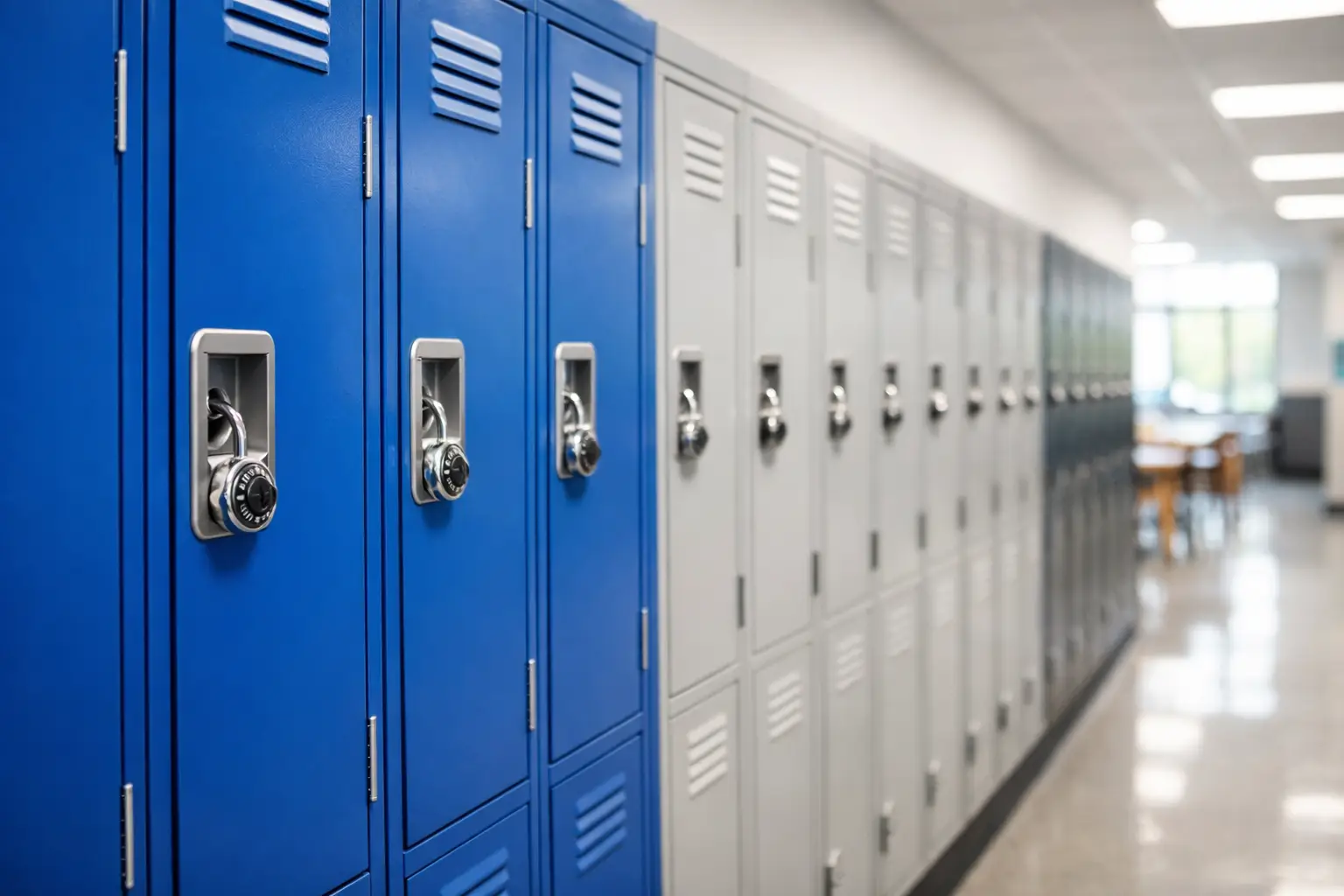
The right school lockers do more than keep bags and coats off classroom floors. They help a school day run with less congestion, give pupils a secure place for personal belongings and protect equipment from the wear associated with busy corridors, changing areas and shared facilities. For school business managers, contractors and specifiers, the challenge is choosing a locker solution that remains practical long after the first term.
A low initial price can be attractive, particularly across a large refurbishment programme. Yet lockers are opened, shut, loaded and occasionally knocked hundreds of times each week. Material choice, door construction, locking method and layout all affect the lifetime value of the specification. A considered choice can reduce replacement requirements, support safer circulation and present a clean, organised environment for pupils, staff and visitors.
What school lockers need to withstand
Education environments place different demands on storage than a typical office. Use is concentrated around lesson changes, morning arrival and the end of the day. Rows of lockers may be used by younger pupils, sixth form students, teaching staff or sports teams, each with different belongings and expectations.
The first consideration is traffic. Corridor lockers need doors and hinges suited to frequent daily use, with a finish that can be cleaned easily. In changing areas, moisture resistance matters just as much as impact resistance. A locker that performs well in a dry classroom zone may not be the right choice beside showers, swimming facilities or external access points.
Capacity is equally important. A pupil carrying books, PE kit, a coat and a larger backpack will quickly outgrow a narrow compartment. Conversely, using full-height compartments throughout can consume valuable floor area where smaller personal-item storage would be sufficient. The most effective layout reflects how each part of the school operates rather than applying one locker size across every space.
Choosing the right locker material
No single material is right for every education project. The best option depends on location, user group, budget and the intended service life.
Metal lockers for general school use
Metal lockers remain a familiar choice for many dry internal areas. They offer a smart, structured appearance and can suit corridors, classrooms, staff rooms and administration spaces. Ventilation slots may be beneficial where wet coats or PE clothing are likely to be stored, while powder-coated finishes provide a choice of colours that can complement school branding or wayfinding.
The specification should look beyond the outer appearance. Gauge, door profile, reinforcement and frame construction influence how well a metal locker copes with repeated use. For projects where damage is a regular concern, stronger doors and carefully selected locking arrangements are likely to offer better long-term value than a basic lightweight model.
Laminate lockers for high-use and changing areas
Compact grade laminate lockers are often specified where durability and moisture resistance are priorities. Their solid, dense construction makes them well suited to demanding areas such as sports changing rooms, leisure-linked school facilities and washroom-adjacent spaces. They are also available in a broad range of colours and finishes, helping to create a coordinated scheme with cubicles, vanity units, wall cladding and benching.
Laminate usually represents a higher initial investment than entry-level metal storage, but the trade-off can be worthwhile where exposure to wet clothing, cleaning routines and heavy use is expected. It is particularly useful when appearance retention matters in a public-facing or recently upgraded facility.
Plastic lockers for wet environments
Plastic lockers can be a practical solution in consistently wet or humid spaces. They are resistant to corrosion and straightforward to wipe down, making them appropriate for swimming pool changing areas, shower zones and specialist facilities. Their lighter construction can also support flexible layouts where site conditions call for it.
However, material selection should still account for the anticipated level of impact and the finish required. A strong project specification considers the whole environment: moisture, traffic, cleaning products, supervision levels and the type of belongings users will store.
Locker sizes and door configurations
The number of doors per compartment determines both capacity and user experience. One-door lockers provide room for bulkier items and longer garments. Two-door options can balance personal storage with overall locker numbers, while four-door and six-door configurations are useful where books, phones, lunchboxes or small bags are the main requirement.
A mixed arrangement often works best. Full-height lockers near changing facilities can accommodate PE kit and coats, while smaller compartments in teaching blocks may maximise capacity for personal possessions. Staff storage should also be assessed separately. Teachers and support teams may require space for documents, devices or bags that pupils do not carry.
Dimensions must work with the available circulation space. A generous locker bank is of little benefit if it narrows a busy route at lesson change. Early coordination with the wider room plan helps buyers balance storage numbers, access and clear movement through the building.
Security that suits the user group
Locking choice has a direct effect on day-to-day management. Key locks are familiar and affordable, but lost keys can create an administrative burden. Combination locks reduce the need for key control and can be useful for pupils, although staff need a clear process for resets and emergency access. Digital and RFID options may suit higher-specification schemes or settings with existing access systems, but they require a proportionate approach to budget and ongoing management.
For younger pupils, simplicity is usually more valuable than advanced features. Locks should be easy to operate without causing queues or requiring frequent support. For staff rooms, sixth form areas and facilities used outside standard school hours, a higher level of control may be appropriate.
Numbering is another small detail with a large operational benefit. Clear locker numbers support allocation, make reporting easier and help facilities teams manage maintenance requests. Colour zoning can also distinguish year groups, departments or changing-room areas without relying on additional signage.
Practical planning for school locker layouts
A locker project should start with user numbers and behaviour, not simply the dimensions of an available wall. Consider whether every pupil needs a dedicated compartment, whether lockers will be shared between year groups and whether users will access them at the same time. These answers shape both capacity and layout.
For a secondary school, lesson-change traffic may call for locker banks spread across several zones rather than one central concentration. In a primary setting, lower heights and simple access can be more appropriate. A sports block may need a different specification again, with larger compartments, moisture-resistant materials and adjacent benching to support changing routines.
There is also value in coordinating lockers with the surrounding interior products. Matching colours and materials across changing cubicles, toilet cubicles, benching and wall finishes can make a refurbished area feel intentional rather than assembled from separate purchases. It also gives procurement teams a clearer route to managing consistency across the project.
Specification details that protect long-term value
The most successful locker specifications account for the details that are easy to overlook at tender stage. These include door stops, hinges, ventilation, feet or plinth arrangements, end panels, sloping tops where hygiene is a concern and the suitability of finishes for the school’s cleaning regime.
Consider maintenance from the outset. Can locks be managed easily? Are replacement parts available? Will the finish tolerate routine cleaning without looking tired? In high-use education settings, these questions have more value than an attractive image on a product sheet.
Lead times also deserve early attention. School works are often planned around fixed holiday windows, funding deadlines or phased programmes. UK manufacturing and a supplier with clear product options can help project teams move from quotation to approved specification with greater confidence. Total Cubicles supports education projects with practical consultation and made-to-specification options, helping buyers select lockers that align with both the environment and the programme.
School lockers work hardest when they are treated as part of the building’s daily operation, not an afterthought. A material and layout chosen for the real demands of pupils, staff and the space will continue to support an orderly, professional learning environment year after year.