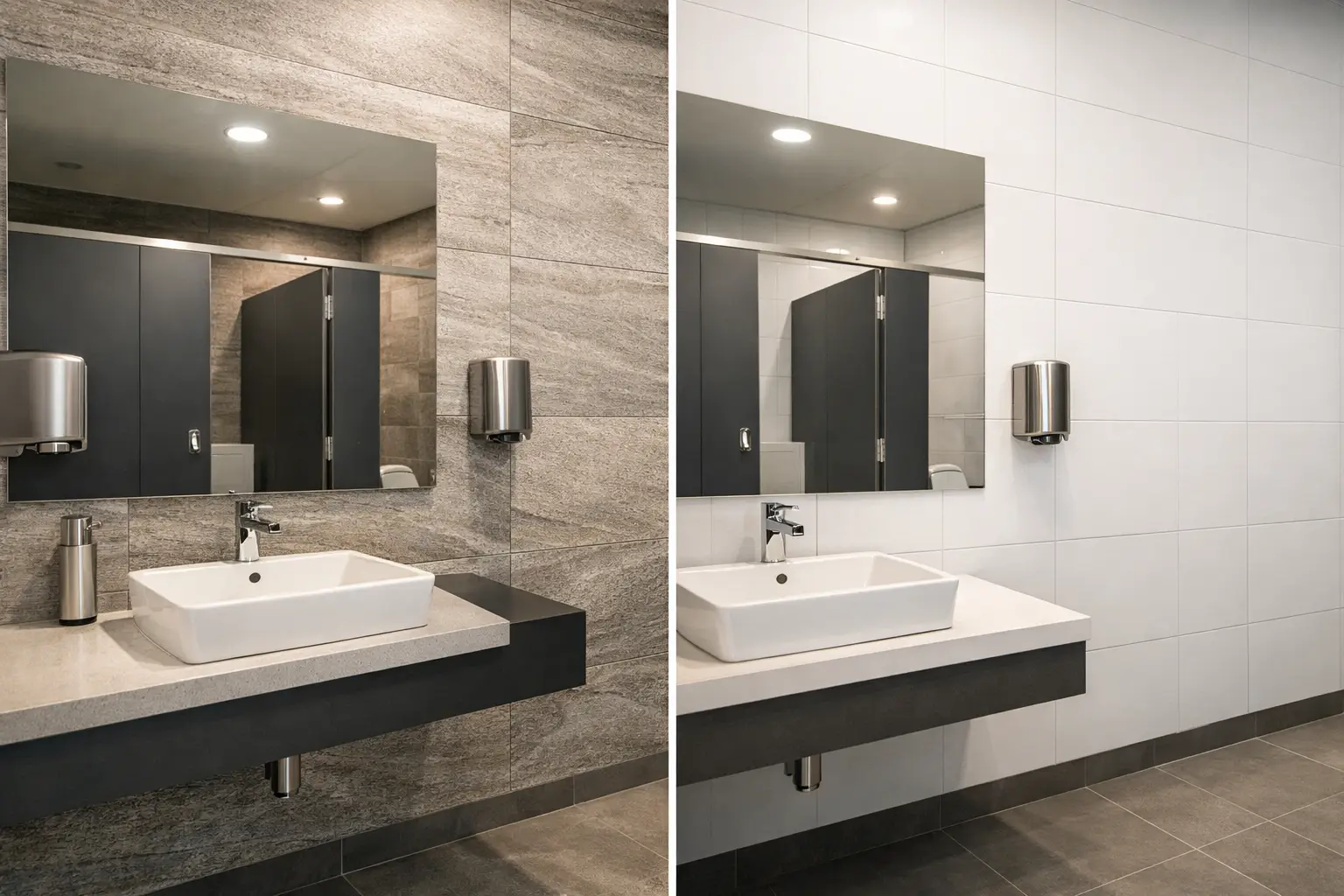
A cracked grout line beside a wash basin can quickly become more than a cosmetic issue. It can hold moisture, discolour over time and create an avoidable cleaning burden in a busy school, office or leisure washroom. So, can wall cladding replace tiles? In many commercial environments, yes – provided the panel material, wall condition and expected level of use are properly considered at specification stage.
Tiles remain a familiar finish, and they can suit projects where a particular visual effect is required. However, hygienic wall cladding offers a practical alternative for organisations that need a durable, easy-clean surface with fewer joints and a more predictable maintenance profile.
Can wall cladding replace tiles for commercial washrooms?
Wall cladding can replace tiles across substantial areas of a commercial washroom, including walls around vanity units, hand-washing zones, WC areas and changing facilities. Its main advantage is the reduction in grout joints. Large-format panels create broad, continuous surfaces that are quicker for cleaning teams to wipe down and leave fewer places for dirt, soap residue and moisture to collect.
That matters in high-traffic settings. In education, pupils may use washrooms throughout the day with limited time between cleaning rounds. In offices and public buildings, facilities teams need materials that retain a tidy appearance without demanding frequent remedial work. In leisure environments, humidity and repeated contact with water place further demands on wall finishes.
The answer is not that cladding is automatically better in every location. Tiles may still be appropriate where a detailed decorative finish is central to the design, where existing tiled areas are being retained, or where a project has a very small, localised repair requirement. But for full washroom refurbishments and new commercial schemes, wall cladding is often the more efficient material to assess first.
Why fewer joints matter in daily use
The performance difference between wall cladding and tiles is often less about the visible face of the material than the joins between sections. Tile grout is porous unless carefully sealed and maintained. Over time, it can stain, crack or deteriorate, particularly in washrooms exposed to frequent cleaning, moisture and hard use.
Wall cladding panels are designed to form a smooth, wipe-clean finish. Joints remain necessary, but there are far fewer of them over a large wall area. This supports good washroom hygiene and makes routine cleaning more straightforward. It also gives the room a cleaner, more contemporary appearance, particularly when coordinated with vanity units, IPS access panels and toilet cubicles.
For facilities professionals, this is a whole-life consideration rather than simply an aesthetic choice. The initial material cost should be weighed against likely cleaning time, maintenance call-outs, replacement of damaged grout and the disruption caused when washroom areas require attention.
Where wall cladding is the stronger choice
Cladding is particularly well suited to projects where hygiene, speed of programme and resilient finishes are priorities. It performs well in school washrooms, workplace facilities, changing rooms, healthcare support areas and public-use WCs, subject to the specific requirements of the space.
In education, a smooth surface is useful where walls are likely to receive regular scuffs and cleaning. In leisure and changing facilities, moisture resistance and ease of cleaning become more prominent considerations. In offices, cladding can help create a consistent finish across multiple floors or sites, supporting a professional appearance with practical upkeep.
It is also a sensible option where a coordinated specification is needed. Selecting wall finishes alongside cubicles, vanity units, lockers or benching allows project teams to align colours, material character and durability expectations. This can simplify decisions for contractors and procurement teams, while helping the completed washroom feel considered rather than assembled from unrelated components.
Material grade should match the environment
Not all wall cladding products are interchangeable. A low-demand staff WC and a heavily used secondary school washroom present very different challenges. Specifiers should consider impact resistance, moisture exposure, cleaning regimes and the likelihood of deliberate damage before choosing a panel type and thickness.
Compact grade laminate and other hard-wearing panel materials are often selected for demanding commercial settings because they are built to withstand regular use. Lighter-duty decorative panels may suit dry, lower-traffic areas, but they should not be assumed suitable for wet changing environments or busy public washrooms.
The wall behind the cladding also matters. A sound, suitably prepared background is necessary to support a durable finish. Existing moisture problems, uneven surfaces or damaged substrates should be addressed as part of the wider project plan rather than hidden behind a new panel surface.
Comparing wall cladding with tiles
Tiles offer design flexibility, from small-format patterns to premium stone or porcelain effects. They are a long-established choice and can be highly durable when correctly specified and maintained. Yet their strengths can be less relevant in a washroom where practical cleaning and long-term resilience are the main objectives.
Wall cladding generally provides a faster route to a large, uniform wall finish and can reduce the number of trades and processes required on site. Its visual options have also expanded significantly, with plain colours, contemporary neutral tones and finishes that work well alongside modern commercial washroom furniture.
Cost comparisons require care. A simple tile selection may appear economical at first glance, while high-performance panels can carry a higher material price. The overall project cost, however, includes preparation, labour, finishing details, future maintenance and the time a washroom may be unavailable for repair work. For many commercial buyers, that broader comparison is more useful than a price-per-square-metre calculation alone.
There are trade-offs. A damaged tile can sometimes be replaced individually, whereas damage to a cladding panel may require a larger section to be changed. Conversely, tile repair often means dealing with matching stock, grout colour and surrounding finishes. The right option depends on the condition of the building, the anticipated abuse level and the maintenance resources available after handover.
Specification points that should not be overlooked
A good wall cladding specification should consider more than colour and panel size. Cleaning chemicals, fire performance expectations, moisture exposure and compatibility with adjacent products all need early attention. In public sector, healthcare and education projects, the brief may also include particular hygiene policies or estate standards that influence the final selection.
Detailing around basins, service zones, corners and access points deserves equal care. These are the areas where water can be directed towards edges and joints, or where future access may be required. Clear drawings and early coordination reduce the risk of unsuitable cuts, mismatched finishes or avoidable delays later in the programme.
Accessibility should also form part of the wider washroom design. Wall finishes should complement, rather than distract from, clear wayfinding, suitable contrast where required and the practical positioning of sanitaryware and support features. A clean visual finish is valuable, but it must sit within a washroom that works safely and comfortably for all users.
At Total Cubicles, UK quality manufacturing and project-focused support help buyers coordinate wall cladding with commercial cubicles, IPS panels and vanity solutions. For projects with complex layouts or multiple product types, 3D CAD support can provide added confidence before materials are committed.
Making the decision for your project
Start with the operational reality of the room. How many people will use it each day? Is it regularly humid? Will cleaning be frequent and intensive? Does the client need a highly decorative tiled look, or a hard-wearing, low-maintenance finish that coordinates with the rest of the washroom?
Where hygiene, cleaning efficiency and long-term practicality lead the brief, wall cladding is a credible replacement for tiles and often the more commercially sensible one. Where the design depends on intricate tile layouts or a specific premium surface, tiles may retain their place. The strongest specification is the one that reflects how the washroom will actually be used long after the project is complete.