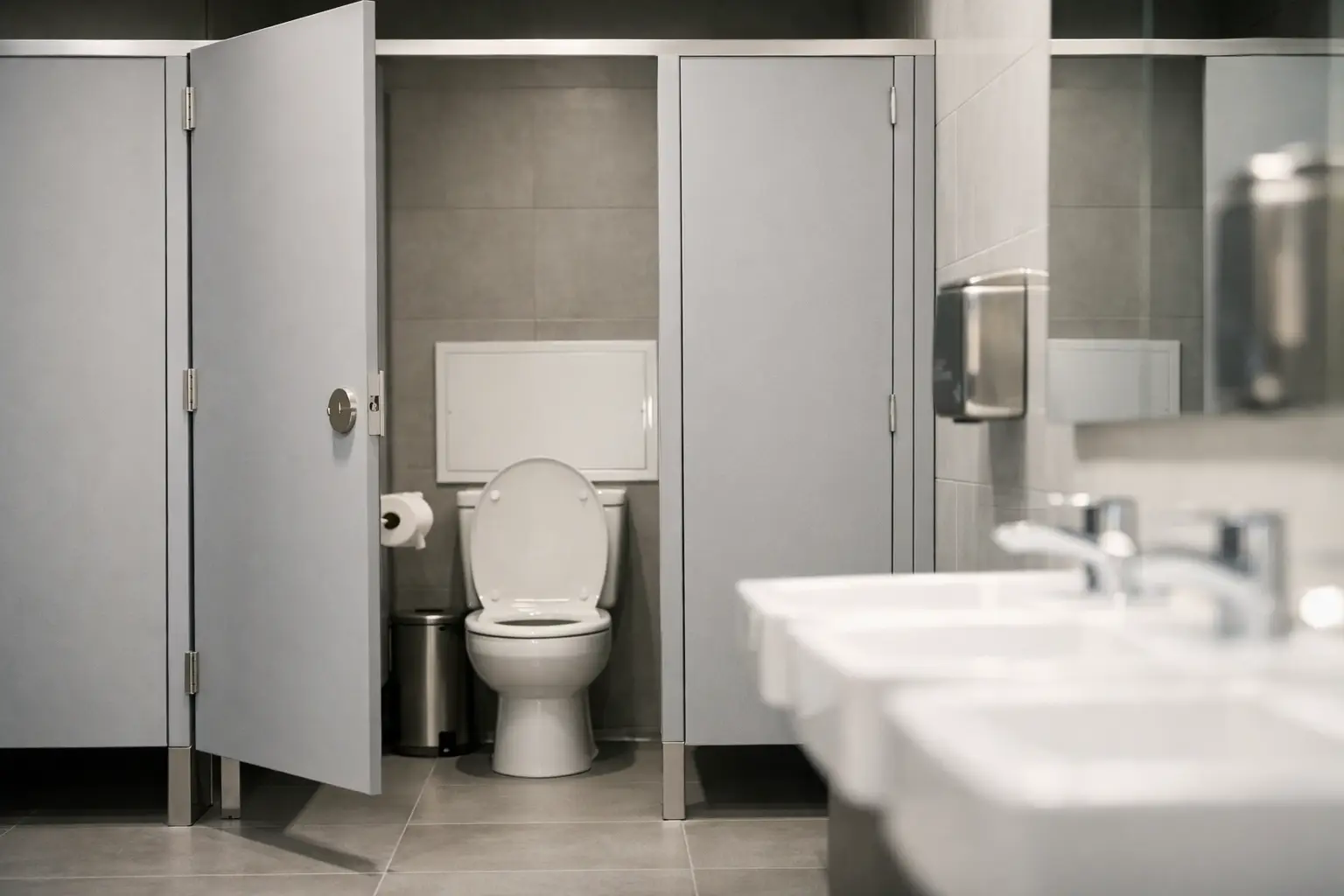
A pupil should be able to use a toilet without feeling watched, exposed or rushed. Yet a school washroom also needs to discourage misuse, support safeguarding and withstand constant use. That is why the question, do school toilets need privacy, cannot be answered with a simple yes or no. Privacy is essential, but it must be designed alongside supervision, accessibility, durability and day-to-day management.
For school business managers, estates teams and specifiers, the practical question is not whether to provide privacy. It is how to specify a washroom environment that protects dignity without creating avoidable blind spots or operational problems.
Why privacy matters in school toilet design
A toilet cubicle is a personal space, regardless of the user’s age. Pupils need to feel secure when using facilities during a busy school day, particularly those who are anxious, disabled, managing a medical condition or simply concerned about teasing from peers. Poor privacy can lead some children to avoid using the toilet altogether, which is not a minor comfort issue. It can affect wellbeing, concentration and attendance.
Traditional cubicle layouts with low doors and large gaps may offer easy sightlines, but they can make pupils feel vulnerable. In secondary settings especially, expectations around personal dignity are higher. A washroom that feels exposed is less likely to be treated as a respectful shared space.
Privacy also has a direct bearing on inclusion. Schools must consider the needs of pupils with disabilities, pupils who require additional support and those who may need a more private or accessible facility. The Equality Act 2010 requires reasonable adjustments where needed, while accessible washroom provision should be considered against the relevant building guidance for the project and location.
Privacy should not mean isolation
The concern most often raised about more private school toilets is safeguarding. Staff need to be able to monitor entrances, identify congestion and respond quickly if a pupil needs help. This does not require clear views into occupied cubicles.
A well-considered layout separates general supervision from personal privacy. Sightlines can be retained at the washroom entrance and handwashing area, where appropriate, while cubicles provide proper enclosure. Clear circulation, good lighting and a layout that avoids concealed corners can all support oversight without compromising a pupil’s dignity.
For many projects, the best approach is a combination of full-height or increased-height cubicles and an open, visible washbasin zone. This gives pupils privacy where it is needed most, while allowing staff to observe the shared area from a suitable position. The precise balance will depend on the age group, safeguarding policy, building layout and the school’s experience of managing the space.
Full-height cubicles: when they are the right choice
Full-height cubicles can provide a more secure, private and contemporary washroom experience. They are often well suited to secondary schools, sixth-form settings, colleges and education facilities where users reasonably expect greater privacy.
They can also reduce the visual impact of untidy cubicles, discourage looking over or under partitions and make the washroom feel more considered. When matched with hard-wearing doors, robust ironmongery and moisture-resistant panels, they offer a practical solution for demanding environments.
However, full-height systems require careful specification. Ventilation, lighting, ceiling conditions, emergency access arrangements and maintenance requirements all need to be addressed at design stage. The cubicle system should be appropriate for the building, the expected footfall and the school’s safeguarding procedures rather than selected on appearance alone.
Standard-height cubicles: a valid option in some schools
Standard-height cubicles remain appropriate for many primary schools and high-traffic education washrooms. They offer a familiar format, can support staff awareness of occupancy and are often a cost-effective choice where budgets are tightly controlled.
The key is to avoid treating standard height as a reason to accept poor privacy. Door and partition dimensions, modesty gaps, secure locks and the condition of panels all influence how private a cubicle feels. A badly maintained cubicle with damaged edges, loose locks or wide gaps will undermine pupil confidence whatever its height.
Do school toilets need privacy at every age?
The privacy needs of younger pupils are not identical to those of teenagers, but every pupil deserves a toilet environment that is safe and respectful. Primary schools may place greater emphasis on visibility and easy staff support, particularly in early years and infant settings. Even so, cubicles should prevent unnecessary exposure and provide secure, usable doors.
As pupils become older, privacy should become a stronger part of the brief. Secondary-school washrooms need to account for adolescent wellbeing, increased self-consciousness and the need for pupils to manage personal care discreetly. Higher partitions or full-height cubicles may therefore be more appropriate, particularly in refurbishment projects intended to improve pupil experience and reduce complaints.
A separate accessible toilet, where provided, should not be overlooked as a general-purpose overflow space. It must remain available for the people who need it and should be specified with the correct clearances, fittings and access arrangements for the applicable guidance.
Materials matter as much as the layout
Privacy is quickly lost when a washroom deteriorates. A cracked panel, warped door or damaged lock can leave a cubicle unusable and make pupils reluctant to use the facilities. Material selection should reflect the intensity of school use, the cleaning regime and the risk of moisture or vandalism.
Compact grade laminate is a strong choice for many school washrooms because it is dense, impact-resistant and suited to wet, high-use areas. It is available in a broad range of colours and finishes, allowing schools to create a brighter, more welcoming environment without compromising on practicality. For lower-risk, dry areas, melamine-faced board may be suitable where the budget and expected use support it.
Ironmongery should be chosen for reliability rather than novelty. Indicators and emergency-release mechanisms need to be easy for authorised staff to operate, while still giving pupils a clear sense that the cubicle is occupied and secure. Doors should close consistently and withstand repeated use without loosening or misaligning.
Colour can also support better behaviour. Light, cleanable finishes can make damage or graffiti easier to identify, while coordinated panels, vanity units and wall cladding give the room a more coherent appearance. A washroom that looks cared for is more likely to be respected by users.
Build privacy into the project brief early
Privacy is not a finishing detail. It should be considered alongside pupil numbers, peak break-time use, accessibility needs, cleaning access, drainage positions, ventilation and the school’s safeguarding approach. Leaving it until late in the specification process often leads to compromises that do not serve pupils or facilities teams well.
A useful brief should define the age range of users, likely daily footfall, wet or dry conditions, preferred cubicle height, required accessible provision and the level of staff visibility expected in shared areas. It should also identify whether the project needs standard school cubicles, more robust compact laminate systems or a bespoke arrangement to suit an unusual footprint.
Total Cubicles supports education projects with UK-manufactured cubicle systems, coordinated washroom products and specification support for buyers who need clarity on material options, lead times and suitable configurations. For time-sensitive programmes, confirming the required performance level and finish early can help keep procurement decisions straightforward.
A better washroom supports a better school day
The strongest school toilet designs do not force a choice between privacy and safeguarding. They use sensible planning to provide both: dignified enclosed cubicles, visible shared spaces, durable materials and features that help staff manage the area confidently.
When pupils trust that a toilet is clean, secure and private, they are more likely to use it as intended. That is a small but meaningful standard for any education setting to set.