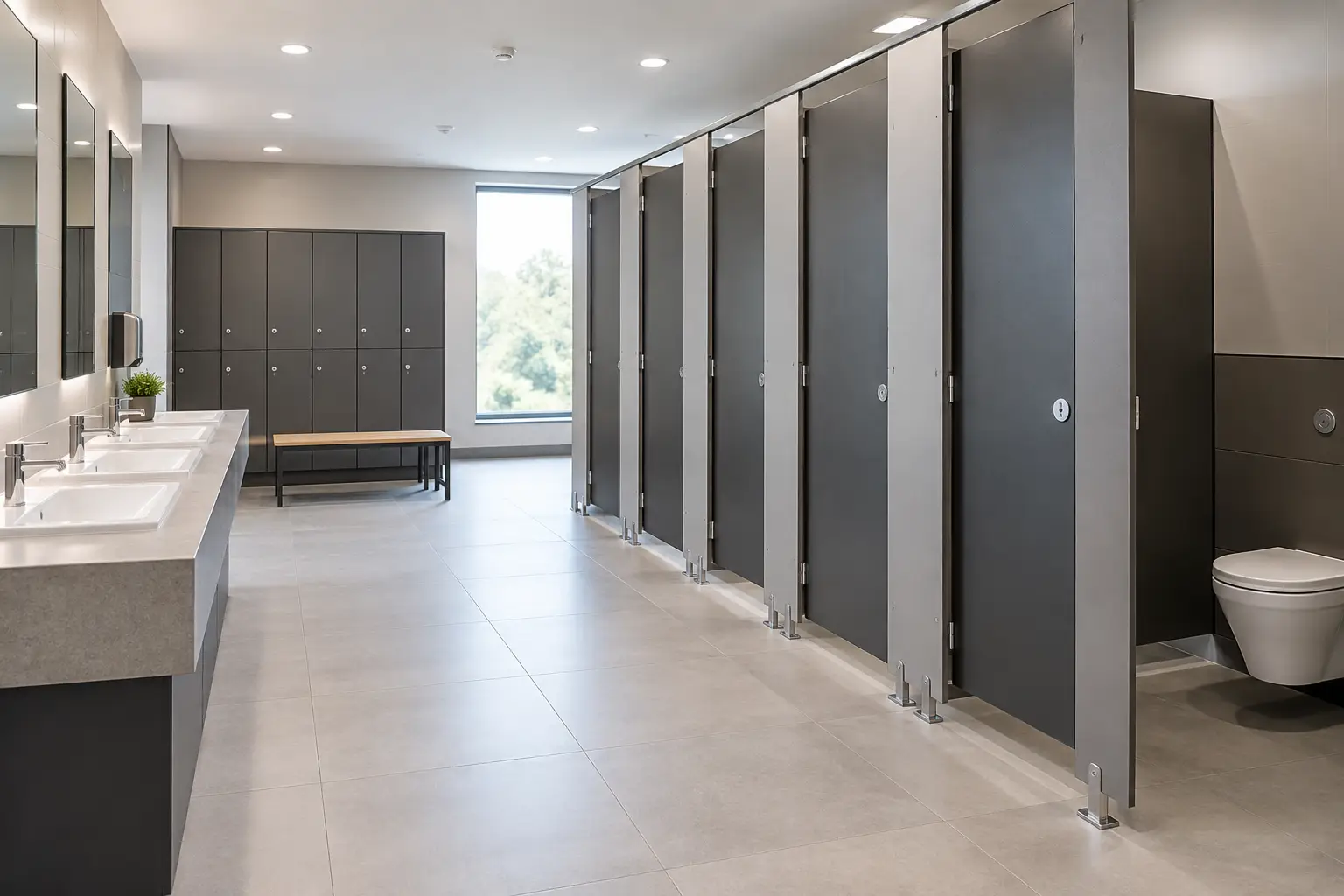
A school washroom used every day by hundreds of pupils places very different demands on cubicles than a low-traffic office floor. So, how long do toilet cubicles last? In commercial settings, a well-specified installation may provide 10 to 25 years of service, but the real answer depends on material choice, moisture exposure, user behaviour, cleaning routines and the quality of installation.
For facilities teams, contractors and specifiers, the useful question is not simply how many years a cubicle might survive. It is whether the chosen system will remain safe, presentable, hygienic and cost-effective throughout the expected life of the building or refurbishment cycle.
How long do toilet cubicles last by material?
Material is usually the strongest indicator of likely service life. A lower-cost board can be entirely appropriate for a dry, lightly used washroom, while a leisure centre changing area needs a panel designed to tolerate regular water exposure and intensive cleaning.
Melamine-faced chipboard
Melamine-faced chipboard, often referred to as MFC, is a practical choice for dry commercial washrooms with moderate footfall. In a well-ventilated office, staff area or controlled-access facility, it can commonly last around 10 to 15 years when properly maintained.
Its value lies in cost efficiency and a wide choice of finishes. However, exposed or damaged edges can allow moisture into the board core. Once water ingress begins, swelling and surface breakdown can follow. MFC is therefore less suitable for shower areas, poolside changing rooms or washrooms where floors and panels are regularly saturated during cleaning.
High-pressure laminate systems
High-pressure laminate offers stronger resistance to knocks, scratches and routine moisture than standard MFC. Depending on the construction and environment, HPL cubicles can often deliver 15 to 20 years of reliable use.
This makes it a sensible middle ground for busy offices, schools, visitor attractions and public buildings where appearance matters but the area is not continuously wet. Details still matter: sealed edges, suitable ironmongery and adequate ventilation all affect how the system performs over time.
Compact grade laminate
Compact grade laminate, or CGL, is widely specified where durability is the priority. Its solid, water-resistant construction is suited to high-traffic washrooms, schools, sports facilities, leisure centres and demanding public-use settings. A correctly installed compact laminate cubicle system can often remain in service for 20 years or more.
CGL costs more at the outset, but it can reduce replacement and repair requirements in harsh environments. It resists impact, graffiti removal, frequent cleaning and humid conditions far better than moisture-sensitive board products. For wet changing areas and shower-adjacent installations, it is normally the more dependable long-term option.
Powder-coated metal and specialist materials
Powder-coated metal cubicles can offer a long working life in appropriate applications, particularly where a clean, contemporary appearance and impact resistance are required. Their performance depends heavily on coating quality, edge protection and the local environment. Persistent moisture, salt air or coating damage can lead to corrosion if not addressed.
Specialist materials, including glass or bespoke printed panels, should be assessed individually. They can be highly durable, but the expected lifespan should be considered alongside cleaning methods, replacement panel availability and the suitability of fittings for the setting.
The environment can shorten or extend service life
Two installations with the same panels may age very differently. A cubicle does not fail because it reaches a particular birthday. It fails when its material, fittings or fixings are no longer suited to the conditions around it.
Humidity is a major factor. Washrooms with poor extraction, persistent condensation or wet floors place sustained pressure on panels, edges and fixings. In shower rooms and changing facilities, specifying water-resistant panels alone is not enough. Leg type, floor clearance, wall channels and sealing details must also support effective drainage and cleaning.
Footfall matters just as much. High-volume school washrooms, motorway services, stadiums and leisure venues experience more door movement, more impacts and more opportunities for misuse than a small corporate office. In these locations, heavy-duty hinges, indicator bolts, pedestal systems and vandal-resistant fittings can be as important as the panel material itself.
Cleaning practice also has a direct effect. Abrasive pads, harsh chemicals and excessive water can damage surfaces or compromise vulnerable edges. A cleaning specification should match the cubicle finish. Facilities managers should also ensure that cleaners can reach corners, floor junctions and hardware without repeatedly flooding panel bases.
The fittings often show wear first
Panels receive most of the attention during specification, yet ironmongery frequently determines when a cubicle begins to feel tired. Loose hinges, failing door closers, worn locks and unstable feet create user complaints well before the panels themselves need replacing.
In busy settings, specify commercial-grade hardware designed for frequent operation. Nylon, aluminium and stainless steel options each have a place, but the decision should reflect wet exposure, expected abuse and maintenance preferences. Stainless steel is often a strong choice where corrosion resistance and a premium appearance are required, while impact-resistant nylon fittings can be practical for demanding education environments.
Regular adjustment extends the life of doors and hinges. A door that drags on the floor or strikes the frame places unnecessary load on every component. Promptly replacing a damaged hinge or bolt is normally a modest maintenance task; leaving it unresolved can lead to damaged panels, pulled fixings and an avoidable full cubicle replacement.
Specification decisions that protect the investment
A durable washroom starts with an honest assessment of use. Choosing the cheapest material for a high-moisture, high-footfall environment usually transfers cost into future repairs, disruption and premature refurbishment. Equally, specifying a premium wet-area system for a lightly used, dry staff washroom may not be the best use of the project budget.
When planning a new installation, consider the following factors together:
- expected daily users and peak periods;
- whether the space is dry, humid or regularly wet;
- cleaning frequency and products used;
- risk of impact, vandalism or heavy use;
- accessibility requirements and clearances;
- the availability of matching replacement panels and fittings.
This whole-system approach helps avoid a mismatch between panels, hardware and site conditions. It also supports more accurate lifecycle budgeting. A system with a higher initial cost may offer better value if it remains serviceable for another decade and avoids repeated call-outs.
For education projects, it is worth allowing for the reality of daily use. Stronger compact laminate panels, durable hinges and easy-clean finishes can be justified where pupils use the facility throughout the day. In offices, the balance may favour a modern laminate finish with reliable commercial fittings. Leisure and healthcare projects often require more detailed consideration of hygiene, water resistance, privacy and accessibility.
Signs that toilet cubicles need attention
A cubicle installation rarely needs full replacement at the first sign of wear. Targeted repairs can extend its useful life where the framework and majority of panels remain sound. Loose fittings, scratched surfaces, worn seals and individual damaged doors can often be resolved without closing an entire washroom for a major refurbishment.
Replacement becomes more likely when panels are swollen, delaminating or structurally weakened; when several doors no longer align; when corrosion affects multiple fittings; or when the washroom no longer meets current operational or accessibility needs. A dated appearance can also matter in customer-facing facilities, schools and workplaces where washroom condition influences the perception of the whole building.
Before committing to a full renewal, assess whether the issue is localised or systemic. If damage is concentrated around one cubicle or a set of fittings, replacement parts may be sufficient. If moisture has affected multiple board panels, or the layout itself is no longer suitable, a planned refurbishment is usually the more sensible route.
Build longevity into the original brief
The longest-lasting toilet cubicles are not necessarily the most expensive. They are the systems selected for the actual environment, installed accurately and supported by straightforward maintenance. For project teams, early technical input can clarify the right panel material, hardware, layout and complementary washroom products before cost or programme pressures narrow the options.
With more than 45 years in the industry, Total Cubicles supports commercial projects with UK-manufactured systems, practical specification advice and coordinated washroom solutions. The best time to protect a washroom budget is before the first panel is ordered: specify for the users, the moisture level and the years of service the building genuinely requires.