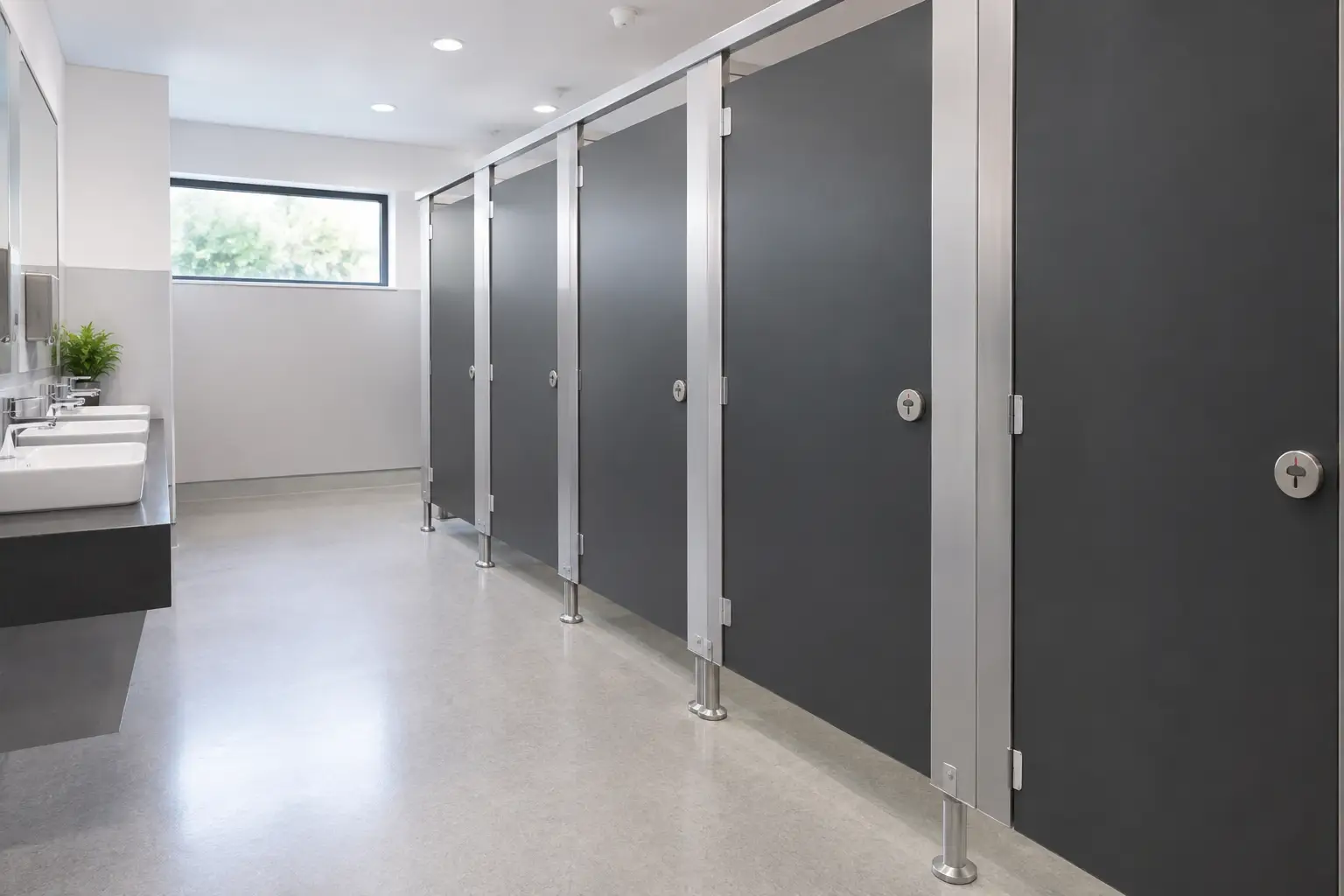
A damaged cubicle door, loose fitting or swollen panel can quickly make a washroom feel poorly managed. For schools, leisure centres, transport-facing facilities and public buildings, the best anti vandal cubicle features are those that reduce opportunities for damage while keeping cleaning, maintenance and replacement straightforward.
The right specification is rarely just a matter of choosing the thickest panel. Material, door construction, fittings, cubicle layout and access for maintenance all affect how well a washroom performs over years of heavy use. A practical anti-vandal solution should also suit the environment, available budget and expected cleaning regime.
What makes a cubicle genuinely anti-vandal?
Anti-vandal cubicles are designed for areas where impact, forced use, moisture and deliberate interference are more likely than in a typical office washroom. The aim is not to make every component indestructible. It is to select materials and details that resist routine abuse, avoid weak points and allow any damaged part to be dealt with efficiently.
This matters because the cost of failure is wider than a replacement panel. A cubicle taken out of service creates disruption for users, additional work for facilities teams and a poorer impression of the building. In an education setting, it can also place pressure on limited washroom provision during the school day.
The best approach starts with an honest assessment of the site. A primary school, a stadium concourse and a community leisure centre may all need durable cubicles, but the likely types of damage, wet-area exposure and supervision levels will differ.
Best anti vandal cubicle features to specify
Dense, impact-resistant panel material
Panel choice is the foundation of the specification. High-pressure laminate faced board can be a suitable commercial option for many dry, supervised washrooms, particularly where a cost-conscious refurbishment needs an attractive, hard-wearing finish. However, exposed chipboard edges or damaged faces can become vulnerable in persistently wet or exceptionally hard-used areas.
For demanding wet environments, solid grade laminate is often the stronger long-term choice. Its dense, self-supporting construction provides very good resistance to moisture, impact and everyday cleaning. Unlike board-based panels, it does not rely on an exposed core that may swell if water reaches an edge.
Thickness should be considered alongside material type. A thicker panel can improve rigidity and provide a more substantial feel, but it should be paired with correctly sized fittings and a well-designed support system. Material performance, not thickness alone, determines how a cubicle responds to knocks, moisture and repeated use.
Strong doors with protected edges
Doors receive the most direct abuse. They are pulled, slammed, kicked and leaned against, so they need to be stiff, accurately fitted and supported by durable hinges. Specify doors that close cleanly without catching on the floor, frame or adjacent panels. Poor alignment can put unnecessary strain on hinges and locks from the first day of use.
Protected or radiused edges can reduce chipping and make panels easier to clean. Where laminate-faced board is selected, securely sealed edges are essential. In high-risk areas, solid grade laminate doors provide better protection against edge damage and repeated moisture exposure.
Door height also requires a balanced decision. Full-height cubicles can improve privacy and reduce access above or below partitions, but they can make supervision, ventilation and emergency access more challenging. Standard-height systems may be more appropriate where sightlines and quick access are operational priorities. The correct choice depends on the building’s safeguarding, management and accessibility requirements.
Anti-tamper hardware and concealed fixings
A durable panel can still fail if the hardware is easy to remove or damage. Anti-tamper fixings help reduce the risk of screws being loosened, taken out or used to interfere with fittings. Concealed or security-fixed components also create a cleaner finish, with fewer exposed points that can be picked at or caught during cleaning.
Hinges should be specified for frequent use and suited to the door weight. Heavy-duty aluminium or stainless steel hardware is often appropriate in busy washrooms, while nylon components may suit lighter-duty applications. The detail matters: corrosion-resistant fittings are particularly valuable in shower areas, swimming pool changing rooms and other humid locations.
Locks and indicator bolts need to withstand repeated operation without becoming difficult to use. Choose a simple, commercial-grade mechanism with an external emergency release where required. Overly complex hardware can create its own maintenance burden, especially where facilities staff need to replace parts quickly.
Look closely at the connections between doors, pilasters and panels. Strong brackets, channels and floor fixings help prevent movement that can loosen over time. A headrail can add rigidity to a cubicle run, although it is not always necessary with thicker, self-supporting systems. For wet areas, a configuration that avoids trapping water and allows effective cleaning is usually the better choice.
Minimal ledges and easy-clean detailing
Anti-vandal performance is closely linked to cleanability. Fittings with unnecessary recesses, exposed joints and horizontal ledges can collect dirt, encourage misuse and make inspections slower. Smooth, well-finished surfaces allow cleaning teams to identify damage early and keep the washroom presentable with less effort.
Floor clearance should be chosen with the cleaning method in mind. Raised cubicles can make mopping beneath the system easier and reduce prolonged contact between panels and standing water. Floor-to-ceiling designs may be selected for privacy or appearance, but they require careful planning around ventilation, access and cleaning.
Colour and finish also deserve consideration. Very dark, high-gloss surfaces can show scratches, smears and cleaning marks more readily. Textured or matt laminate finishes may be more forgiving in busy settings while still allowing the washroom scheme to reflect the wider building design.
Design choices that reduce damage opportunities
Good anti-vandal design goes beyond the cubicle itself. A well-planned washroom layout can reduce hidden areas, improve passive supervision and give users enough space to move without colliding with doors or partitions. Narrow circulation routes and badly positioned doors create accidental impacts that are often mistaken for poor product performance.
Consider the relationship between cubicles, vanity units, hand dryers, bins and access doors. Equipment should not obstruct door swings or create points where users can force a door against a wall or fitting. In changing areas, durable wall cladding, benching and lockers can protect the wider room and provide a coordinated finish.
Where a site has a history of damage, it may be worth choosing a simpler configuration with fewer vulnerable accessories. This is not about making the washroom feel institutional. It is about putting investment into durable, serviceable components rather than features that are unlikely to withstand the environment.
Specify for maintenance, not just installation
A cubicle system should be assessed over its working life, not only on purchase price or visual appearance at handover. Ask how easily doors, hinges, locks and panels can be adjusted or replaced. A system with readily available matching components can reduce downtime and help maintain a consistent appearance after repairs.
For refurbishment projects, survey existing walls and floors carefully. Uneven surfaces, poor substrate condition and inaccurate dimensions can place stress on a new installation. Early technical input and clear setting-out information help contractors avoid problems that later appear as loose fittings or misaligned doors.
It is also sensible to hold a small stock of commonly damaged components for high-use sites, particularly spare locks, hinges and door buffers. This can be more practical than keeping complete replacement cubicles and allows facilities teams to respond before a minor issue becomes a closure.
Compliance must remain part of the brief. Accessible WC provision, emergency release arrangements, circulation space and manifestation requirements should be checked against current project requirements and relevant guidance, including Approved Document M where applicable. Anti-vandal performance should support accessibility and safe use, never compromise it.
Make the specification match the site
The strongest specification is one that matches material and hardware to real conditions. A supervised office washroom may perform well with a commercial laminate system, while a wet leisure facility or heavily used school washroom is likely to justify solid grade laminate, corrosion-resistant fittings and more security-conscious detailing.
Total Cubicles can support this decision with UK manufacturing expertise, product guidance and CAD assistance where a project needs coordinated cubicles, IPS panels, vanity units or changing-room furniture. Providing expected user numbers, cleaning arrangements, wet-area exposure and any known damage issues at quotation stage helps produce a more reliable recommendation.
A well-specified anti-vandal cubicle does not need to look severe. It should simply continue to work, clean well and retain its finish when the building is at its busiest – giving facilities teams fewer avoidable problems to solve.